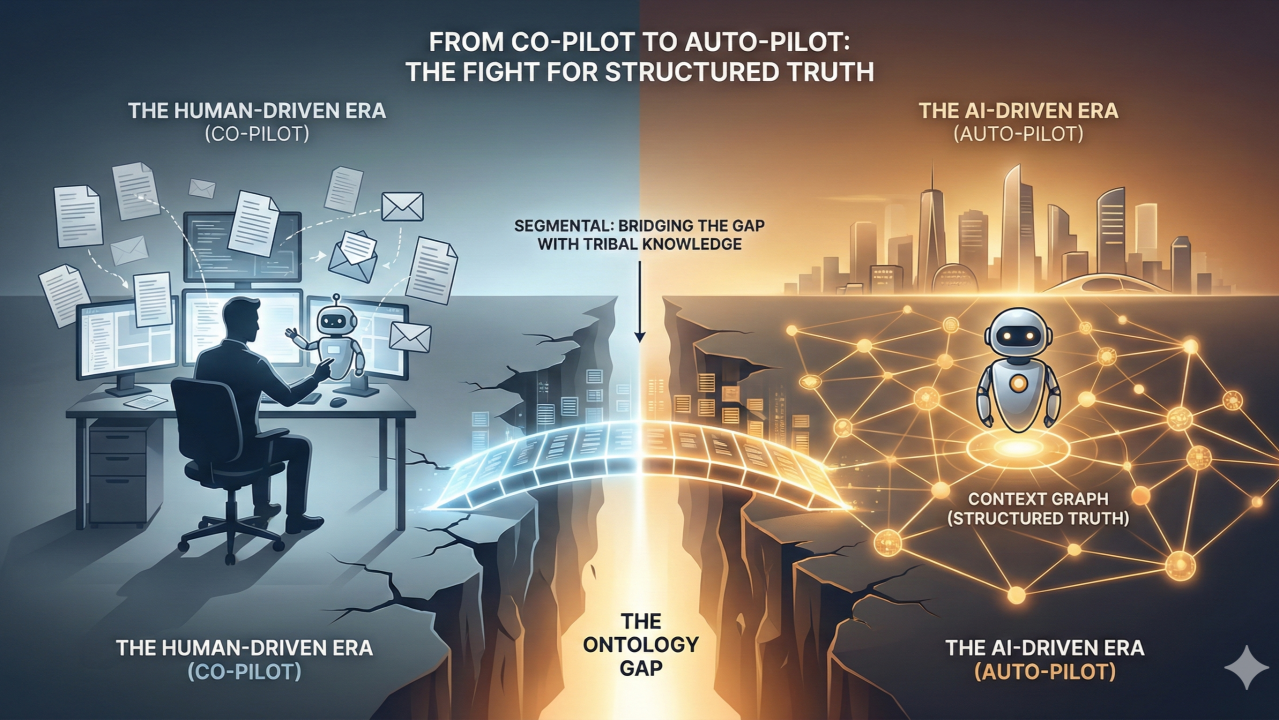
We need to stop using the word "Agent" as a catch-all. In the enterprise, we are actually building two completely different species of software, and they require two completely different survival strategies.
The Workflow Agent (The Smart Glue)
These are fixed-step automations.
The Job: "Take invoice from Email" -> "Extract Data" -> "Update SAP" -> "Slack the Manager."
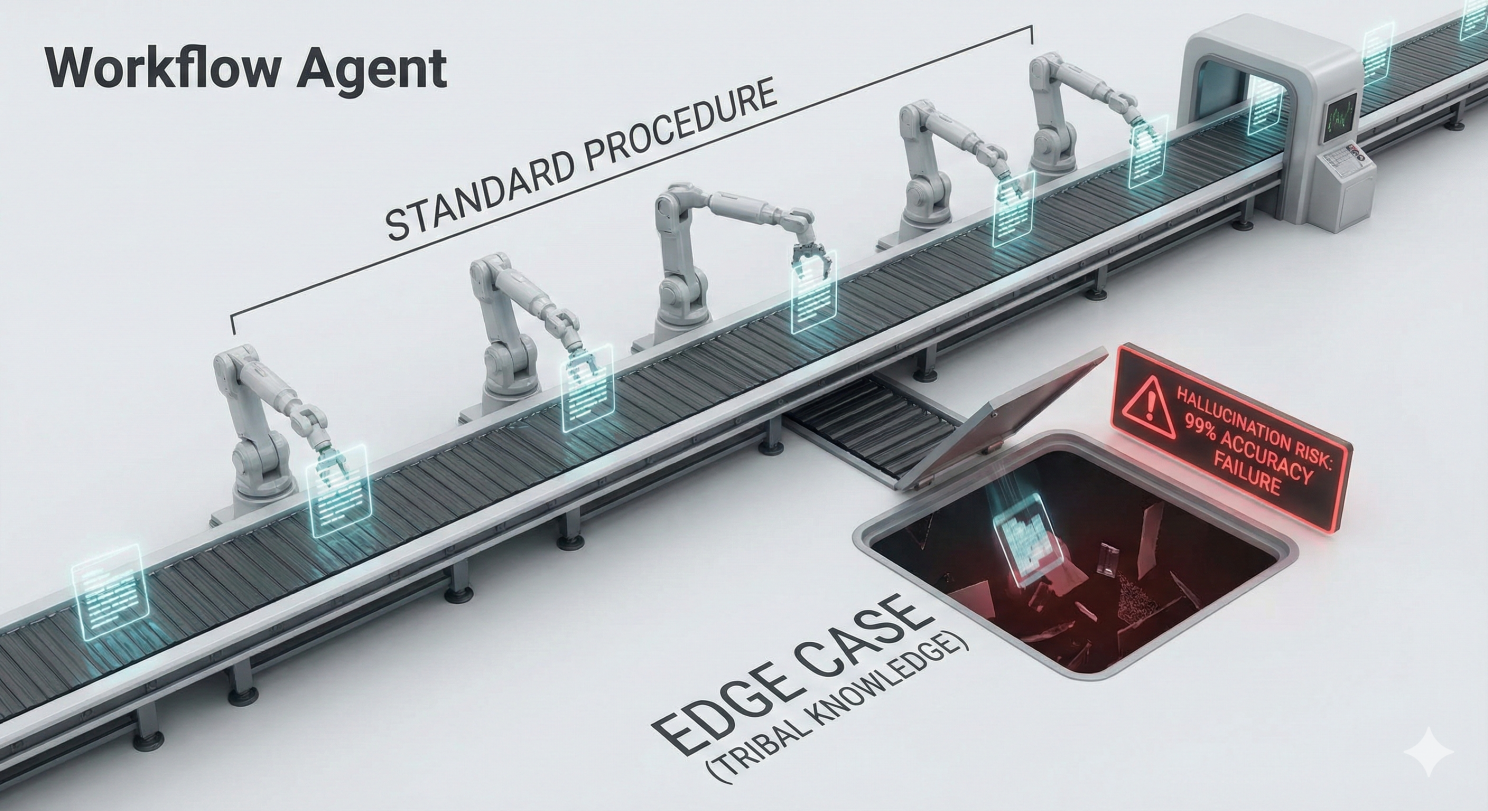
- The Change: Previously, this required brittle, hard-coded APIs. Now, we use LLMs as the glue to make the integration easy and handle messy inputs.
- The Problem: The 99% Accuracy Trap. For a mission critical Workflow Agent, 99% accuracy is a failure. If a Coding Co-pilot hallucinates a variable, you hit backspace. No big deal. If a Supply Chain Agent hallucinates a payment to the wrong vendor, you have a compliance disaster.
In mission-critical industries, hallucination is unacceptable. Reliability must be absolute. The reason these agents fail isn't code—it's Tribal Knowledge.
- The agent follows the "Standard Procedure," but it doesn't know the unwritten rule: "Never auto-approve invoices from Vendor X on Fridays."
- Without capturing that nuance in a Context Graph, the agent is a liability, not an asset.
The Reasoning Agent (The Optimization Machine)
These are the deep thinkers (like o1 or DeepSeek). They have no fixed rules.
The Job: "Analyze the Q3 sales dip and propose a fix."
The Mechanism: They are gigantic optimization engines. They search through thousands of paths to maximize a Reward Function.
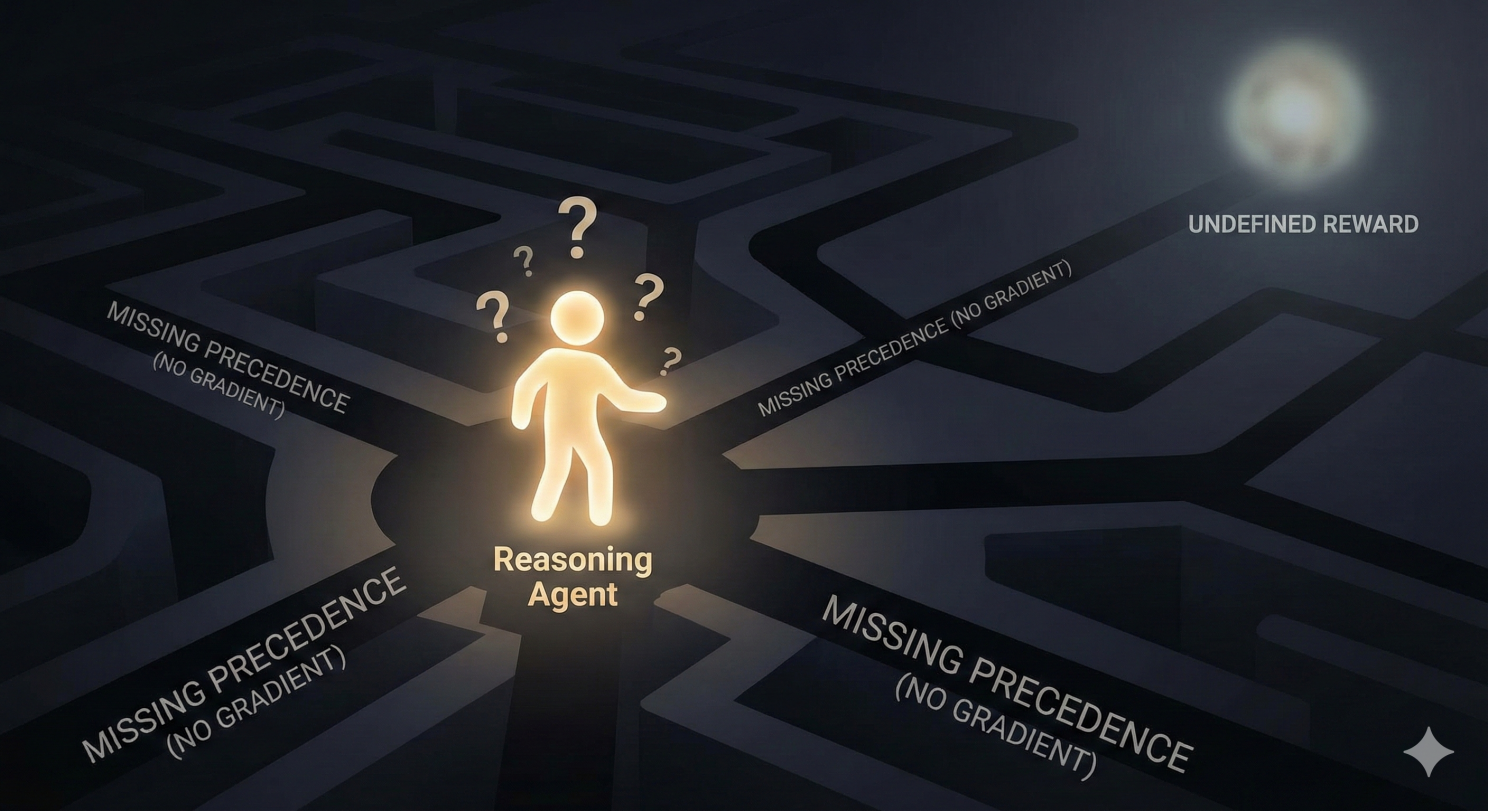
The Problem: You cannot optimize what you cannot define. Reasoning Agents work in labs because "Win Chess" is a clear reward. They fail in the enterprise because:
A) The "I'll Know It When I See It" Problem In business, we rarely have a clear Reward Function. Humans often don't know the "right answer" until a solution is visualized for them. If you tell an agent "Improve Customer Satisfaction," that is a mathematically vague goal. Without a precise reward function, the agent wanders aimlessly, creating plausible-sounding but useless strategies.
B) The Missing Gradient (The Guesswork) To optimize a path, an agent needs to know the steps. But in the enterprise, the steps are hidden in Untold Truths.
- Why did the last project fail? (It wasn't the tech; it was the politics).
- Why does this legacy code exist? (To patch a regulatory hole from 2018).
This is the Precedence Gap. Without these "Working Examples" to guide the optimization, the Agent is guessing. It is trying to derive "Business Physics" from scratch, without access to the history of why things work the way they do.
The Verdict
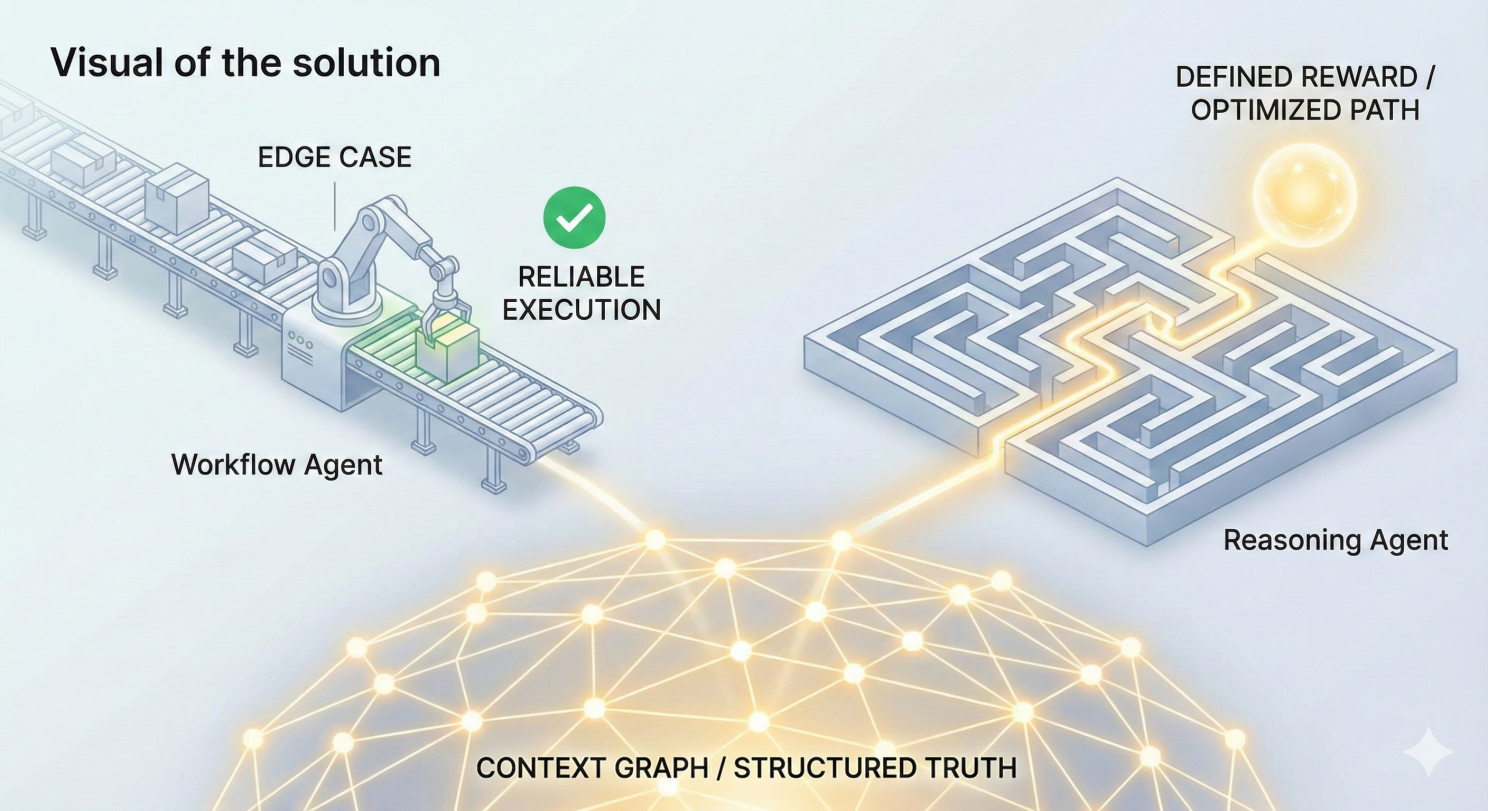
Whether you are building reliable pipelines (Workflow Agents) or autonomous problem solvers (Reasoning Agents), the bottleneck is the same. It is the Data.
- Workflow Agents need Tribal Knowledge to handle exceptions deterministically.
- Reasoning Agents need Tribal Knowledge to define the Reward Function and the Search Path.
We are trying to build Auto-pilots on top of empty maps. Until we do the hard work of structuring the context, we are just building faster ways to get lost.